
Water governance in Canada often looks tidy on paper. Legislation is clear, permit conditions are detailed, and monitoring frameworks are well defined. In practice, however, effective water management depends less on perfect documents and more on how regulators, proponents, and communities interpret and apply those requirements on the ground.
My work as an Environmental Regulatory Specialist with northern water boards, and more recently in Indigenous and mineral development contexts, has given me a practical view of how water governance actually functions in complex, resource-driven environments. This experience has shaped how I think about environmental protection, compliance, and the role of water professionals in bridging policy and reality.
Regulatory frameworks are only as strong as their implementation
Northern Canada operates under robust co-management regimes, particularly in the Northwest Territories, where land and water boards play a central role in regulating industrial activities. These boards issue water licences that govern effluent discharge, water withdrawals, waste management, and monitoring requirements.
From a technical perspective, licence conditions are often sound. Environmental assessments, baseline studies, and years of institutional knowledge inform them. The challenge arises during implementation. Proponents may struggle with data gaps, harsh climatic conditions, or operational constraints. Regulators must then decide how to balance flexibility with environmental protection.
In my role, I reviewed monitoring reports, inspected compliance submissions, and assessed whether data met licence requirements. One recurring issue was not outright non-compliance, but partial compliance caused by unclear monitoring methods or assumptions made during project design. This highlighted the importance of writing licence conditions that are not only technically correct, but also practical and measurable.
Monitoring data must tell a meaningful story
Environmental monitoring generates large volumes of data, particularly for water quality and quantity. However, data alone does not protect water resources. What matters is interpretation. I frequently worked with datasets covering effluent chemistry, surface water quality, groundwater levels, and aquatic effects monitoring. A common problem was that results were presented without sufficient narrative or context. Trends were not clearly explained, anomalies were dismissed without justification, or exceedances were treated as isolated events.
Effective water professionals must go beyond compliance reporting. They must ask harder questions: Do monitoring results align with predicted effects? Are mitigation measures actually working? Are cumulative impacts emerging over time? Addressing these questions requires collaboration between engineers, scientists, and regulators, as well as a willingness to challenge assumptions when data does not behave as expected.
Indigenous knowledge is not supplementary; it is essential
Working within Indigenous governance frameworks has reinforced for me that water management cannot rely solely on Western scientific approaches. Indigenous communities often have long-term, placed-based observations of water bodies that predate formal monitoring programs by decades.
In regulatory processes, Indigenous knowledge can inform baseline conditions, identify sensitive areas, and highlight changes that are not yet captured in datasets. When this knowledge is treated as a checkbox or an afterthought, important risks are overlooked. When it is meaningfully integrated, it strengthens decision-making.
From a technical standpoint, the challenge is translating qualitative observations into regulatory action. This does not mean forcing Indigenous knowledge into Western formats, but rather designing monitoring programs and licence conditions that respond to community concerns tangibly.
Compliance is a relationship, not just an enforcement tool
Early in my career, I viewed compliance primarily through a rule-based lens. Over time, I came to see it as a relationship-based process built on trust, clarity, and consistency. When regulators communicate expectations clearly, and proponents understand the rationale behind conditions, compliance improves. Conversely, vague requirements or inconsistent enforcement undermine confidence in the system.
This is especially true in remote regions where logistical challenges are real, and enforcement resources are limited. In these contexts, proactive engagement and technical support often achieve better environmental outcomes than reactive enforcement alone.
Reflections for young water professionals
For young water professionals entering regulatory or consulting roles, technical knowledge is only part of the job. Understanding how decisions are made, how communities are affected, and how data is used in real-world settings is equally important.
I have learned that good water governance depends on people who can move between disciplines, communicate clearly, and remain grounded in the purpose of regulation. Protecting water resources is not about perfect models or reports. It is about making informed decisions under uncertainty, while respecting both ecosystems and the people who depend on them. As water challenges become more complex under climate change and increased development pressure, the need for technically competent and socially aware water professionals will only grow. My experience has shown me that this is challenging work, but also deeply meaningful.
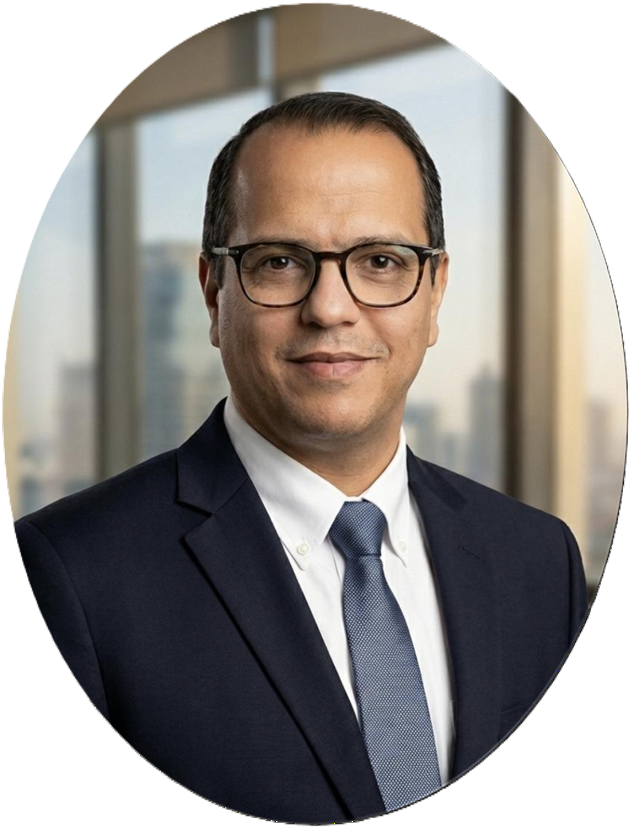
About Author:
Mohannad Elsalhy
Environmental and Civil engineer, Métis Nation of Ontario
Mohannad Elsalhy is an environmental and civil engineer and water professional based in Ontario, Canada. He has supported water and wastewater infrastructure operations with UNRWA in Gaza. He currently works with the Métis Nation of Ontario, supporting Indigenous participation in mineral development and regulatory processes. Previously, he worked as an Environmental Regulatory Specialist with the Wek’èezhìi Land and Water Board in the Northwest Territories, where he reviewed water licence applications, monitoring reports, and compliance submissions for mining projects in remote northern environments. Mohannad holds a Master of Engineering in Environmental Systems Engineering and has professional experience spanning water governance, environmental monitoring, impact assessment, and regulatory compliance. His work has focused on bridging technical requirements with practical implementation, while supporting meaningful Indigenous engagement in water and resource management. He is particularly interested in water governance in northern and Indigenous contexts, cumulative effects assessment, and strengthening the link between monitoring data and decision-making.
 IWA YWP Canada