
Picture yourself as you’ve just finished your undergraduate degree. We’ve all been there before. Fresh out of university, ready to take on every challenge that comes our way, thinking our excitement and willpower are the only things needed for us to jumpstart our careers. These were my thoughts when I decided to enroll in a Master’s degree program, while working full-time as a hydraulics engineer.
But then, real life happened. And, honestly, it was… humbling.
What I didn’t realize at the time was how deeply this year, juggling both, would change me – not just as an engineer, but as a person. One thing that nobody expects is that the first “real-world” project you’ll ever take on as a young water professional is defining who you are, both as a professional and as a human being. The starting point for such a change can be different for everyone. In my case, it was a heavily-packed – even hectic at times – daily schedule. My days began at the office, handling meetings, field work, and numerous projects, while afternoons turned from rest time to lectures, research, and assignments. There were days when I felt persistently tired, and weekends vanished under deadlines. At one point, my life could be summed up in a single word: exhaustion. But, you know what they say – “diamonds form under pressure”. This experience taught me that the key to succeeding in a demanding job, such as working in the water sector, is reforming your mindset, like water reforms itself, to simply persevere through every circumstance, no matter how persistent or pressuring it is.
Uncertainty became a main part of my life, especially in my field of work. Reality in water-related works is far from what is seen in textbooks and courses. However, slowly but surely, I began to accept this challenge and work around it. Acceptance of uncertainty led me to build emotional resilience, and it made me reframe my fear of the unknown as curiosity to learn more about it. Another valuable teacher through this personal development journey was time – specifically the lack of it. When you’re in a time crunch, suddenly everything becomes more intentional. What matters becomes clear in your mind. Organization turns into an act of self-respect. Saying “no” to what doesn’t serve you signals maturity. Your priorities reflect your own personal needs, and not a one-size-fits-all recipe to success. I slowly built a grounded discipline based on purpose and always open to adjustments, so that I could achieve a perfectly imperfect, realistic balance on a daily basis.
Another unexpected growth area was communication. Working in the hydraulics industry means constantly collaborating with researchers and professionals from a plethora of different sectors and backgrounds. Listening intentionally and deeply became a powerful asset I developed during my interactions with knowledge-filled seniors in the field and colleagues from different areas of work that offered their unique perspectives on many projects. Clear communication turned difficult conversations into productive meetups and helped bridge the gap between technicality and humanity. Furthermore, meaningful discussions with my peers and classmates in my Master’s studies challenged me about who I want to be in this field. Soon enough, I started seeing myself as a developing professional and engineer.
The biggest part of my personal growth throughout this year came in how I relate to myself. After gaining new experiences both as a working and a studying water professional, success stopped looking like perfection and started looking more like progress. Small wins are still wins, and they should be celebrated as such. Throughout the career development journey, it is important to remind yourself that the most exciting thing about youth and being a young professional is the opportunity to grow, gently and humanely, in whatever direction fits best.
My journey through my first year as a young water professional could be compared to a tide cycle. There were moments when it seemed like the tide was pulling me under – pressure, deadlines, uncertainty. But each one of these moments has actually allowed me to come back stronger, holding more valuable lessons each time. I learned that professional development doesn’t happen in isolation – it intertwines with personal evolution.
Being a young water professional while working towards a Master’s degree is challenging but also deeply fulfilling. This is more than just developing skills. Professional development is learning to be resilient, not just to water problems, but to life. Water teaches us something powerful: it adapts, flows, carves its path over time, and sustains life wherever it goes. In many ways, this year taught me to do the same.
About Author:
Charalampia-Maria Chatzikonstantinous
PhD student, Aristotle University of Thessaloniki
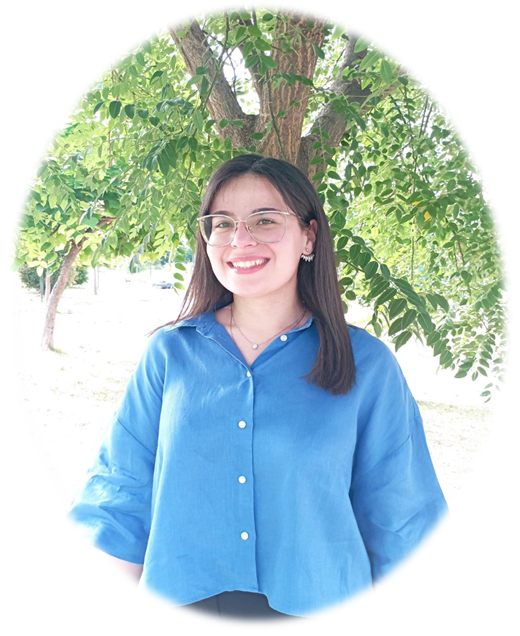
My name is Charalampia-Maria Chatzikonstantinou, I am 24 years old and I’m from Greece. I have obtained a Diploma (Integrated Master) in Rural & Surveying Engineering from Aristotle University of Thessaloniki. Currently, I am completing my Master’s degree titled “Hydraulics Engineering and Environment”, while starting my PhD in GroundwaterVulnerability Assessment. At the same time, I am working full-time as a hydraulics engineer in my family’s engineering firm.
 IWA YWP Canada