
When people ask me why I chose water research, I usually don’t have a short answer. Part of the answer goes back to my childhood. Growing up, one of my favourite places in the house was our family library, where a collection of novels, books, and poetry were kept. One day I came across a poem by the Persian poet Sohrab Sepehri that began with the simple line, “Let’s not muddy the water.” He continues “Let’s not muddy the water. Imagine that close by, a dove is drinking from it, or in a distant grove, a finch is washing its wings in it, or in some village, it fills a storage jar. Let’s not muddy the water [1].” At the time, I didn’t know that those few words would stay with me for years. Looking back, they shaped how I think about water, not just as a resource, but as something we all share and are responsible for protecting.
I’m currently pursuing a Ph.D. at Carleton University, where I develop advanced filtration technologies to remove microplastics from water. Before that, I worked as an Environmental Engineer at Dillon Consulting Ltd, and this summer, I’m serving as a Laboratory Assistant at the City of Ottawa’s Robert O. Pickard Environmental Centre (ROPEC), analyzing drinking water, wastewater, and environmental samples alongside experienced laboratory staff. Seeing both the research and operational sides of water treatment has reminded me how much effort goes into providing safe water every day.
My journey in water quality research has not followed a straight line. During my undergraduate studies in Plant Biology, I became interested in how natural systems could improve water quality. What began as academic curiosity gradually grew into a stronger research direction, leading me to a master’s in Natural Resource Engineering at Shahid Beheshti University, where I investigated narrow riparian buffer zones and their roles in reducing surface runoff contaminants [2]. Those long days in the field taught me the value of careful planning, detailed checklists, adaptability, and persistence, skills that later became essential in my professional career.
When I immigrated to Canada in 2017, beautiful St. John’s, NL, became my first home. Living in a province closely connected to the offshore oil and gas industry made me more aware of the environmental risks of oil spills. Inspired by this challenge, I pursued my second master’s in Civil Engineering at Memorial University of Newfoundland, where I developed superhydrophobic–superoleophilic membranes for oil-water separation [3]. This project brought our team the Terranova Young Innovator Award in 2019 and the publication became featured on the front cover of Chemical Engineering Science Journal [4].
In my Ph.D., my attention turned to one of the fastest-growing emerging contaminants: microplastics. Reports of their presence in treated drinking water, tap water, and bottled water [5] also raised a critical question in my mind whether current water treatment processes are sufficient to limit human exposure to these tiny particles. To explore this, my current research focuses on developing eco-friendly functionalized filter media to maximize the removal of small-sized microplastics from drinking water. My Ph.D. program has been very productive so far. Beyond publications [6,7], presentations at national and international conferences, several awards, and the launch of a water purification startup, I received a two-year Mitacs Accelerate Entrepreneurship award to accelerate the commercialization of our innovative filter. I am also a recipient of NSERC CREATE funding and participate in its interdisciplinary training program, working on water and sanitation challenges in low-resource communities. None of this would have been possible without the guidance, encouragement, and support of my Ph.D. supervisors, for which I’m deeply grateful.
Looking back, every stage of my career has been connected by one goal: protecting water resources through sustainable solutions. We all depend on clean water. When I watch my three-year-old son, drinks from a fountain or splash happily in a lake, I don’t think about filtration media, adsorption kinetics, or MP transport models. I simply hope that the next generation will inherit water that is cleaner than what we leave behind. If my research contributes even a small part toward that future, it will have been worth every muddy field day, every failed experiment, every late night in the laboratory, and every revision along the way. After all these years, I still return to the same simple words I first read as a child: Let’s not muddy the water.
References:
1. Sepehri, S. (1967). Water. Words Without Borders. https://wordswithoutborders.org/read/article/2007-07/water1/.
2. Rasouli, S.A., et al., Retention efficiency of a narrow perennial herbaceous buffer zone for surface runoff of solid particles on high and low slopes: case study of Salardareh River. International Journal of Environmental Studies, 2015. 72(1): p. 87-98.
3. Rasouli, S., et al., Superhydrophobic and superoleophilic membranes for oil-water separation application: A comprehensive review. Materials & Design, 2021. 204: p. 109599.
4. Rasouli, S., et al., Design, fabrication, and characterization of a facile superhydrophobic and superoleophilic mesh-based membrane for selective oil-water separation. Chemical Engineering Science, 2021. 236: p. 116354.
5. Cox, K.D., et al., Human consumption of microplastics. Environmental science & technology, 2019. 53(12): p. 7068-7074.
6. Ghazizadeh, M., et al., Advancements in numerical simulation of microplastics transport in open waters: Model enhancements and sensitivity analyses of boundary conditions and settling velocities. Science of The Total Environment, 2026. 1026: p. 181686.
7. Rasouli, S.A., et al., Removing micro- and nanoplastics (MNPs) from water via novel composite adsorbents: A review. Cleaner Water, 2026. 5: p. 100193.
Lead Editor: elham soleimanian
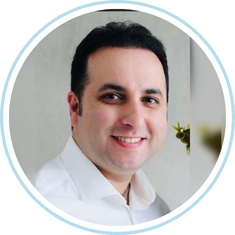
About Author:
Abbas Rasouli
Abbas is a Ph.D. candidate in the Department of Geography and Environmental Studies at Carleton University. His interdisciplinary research integrates science and engineering to track microplastics in Ottawa River and design novel functionalized filter media for removing emerging microplastics in water systems. He holds an M.Eng. in Civil Engineering from Memorial University of Newfoundland and an M.Sc. in Natural Resource Engineering from Shahid Beheshti University. Throughout his graduate studies, Abbas has published several peer-reviewed publications and received multiple awards. He is currently serving as a lab assistant with the City of Ottawa during the summer 2026, adding practical laboratory skills for analysing water and wastewater samples. Previously, his role as an environmental engineer at Dillon Consulting Limited brought him hands-on experience in contaminated site assessment, field sampling, and groundwater monitoring. Beyond research and professional practice, Abbas has contributed to the NSERC CREATE program focused on water and sanitation challenges in low-resource settings and has been active in community-oriented services, including volunteer coaching for newcomers through World Skills Ottawa. He is also a father of a three-year-old son, and his life outside of work reflects the same balance, curiosity, and commitment that define his professional journey.
 IWA YWP Canada