
When you picture field work, you might imagine vast landscapes, rolling hills, and pristine, glistening water bodies in remote areas. What you probably don’t imagine is traffic noise, tourists, and the steady hum of city life. Yet that is exactly what urban water field work is, especially in the Toronto Harbour.
Working in the Toronto Harbour has been a unique and memorable experience, unlike what one might typically expect from environmental water research. Beyond unpredictable weather and technical challenges, each field day brings its own set of urban obstacles. From dodging rogue water taxis to navigating around summer day camps, the area is full of anthropogenic interferences. For instance, when you’re on a kayak with a zooplankton net tossed overboard, the last thing you want to see is a massive ferry bearing down on you. These moments demand adaptability and creativity, forcing you to change course at a moment’s notice. With increasing urbanization, navigating through these trials and tribulations will soon become common practice.
However, these very barriers are part of what makes Toronto the lively, ever-evolving city that is worth protecting. The vibrant public life on the harbourfront and its waters, the Toronto Islands, the Music Garden, Beavertail stands, Sugar Beach, and the Harbourfront Centre draw diverse crowds that change by the minute. There is simply no solitude in urban sampling. Instead, you become intertwined with the city and its inhabitants. A stranger’s morning run by the water or a tourist’s once-in-a-lifetime ferry trip to Centre Island becomes an unexpected part of your field day. And yes, being “photo-ready” at any moment comes with the territory. The waterfront is a shared experience, and people love to capture it. You quickly become a part of something greater than yourself, and what a peculiar feeling that is!
With such a high level of activity, inquisitive individuals are a reminder that we are not separate from our water; we live alongside it. Whether conducting nearshore sampling on foot or aboard a mysteriously stationary kayak packed with field gear, we rarely go unnoticed. There is no being discreet while carrying around a massive multiparameter SONDE, Schindler patalas traps, and coils of rope on the TTC (Toronto Transit Commission). Passersby stop to ask what we are doing, why it matters, and how they can learn more about what they should be doing. Some approach defensively at first, ready to advocate for the sanctity of “their” water. These interactions, nosy as they can be, give me hope. They show that people do want to take steps and preventive measures to ensure environmental health and freshwater security. These moments reaffirm that people care, that they want to protect freshwater, and that they seek to understand how it is managed.
As water professionals working in an urban environment, we carry a unique sense of public responsibility. Our work is not just about collecting data; it is about engaging with people and helping them understand why these efforts matter.
The emerging field of urban water work reminds us that we are all connected by a shared system, with water as our common denominator. The water brings us together, and despite the challenges that come with downtown environmental research, working with water in the heart of the city has been a truly special experience.
About Author: Celene Tate
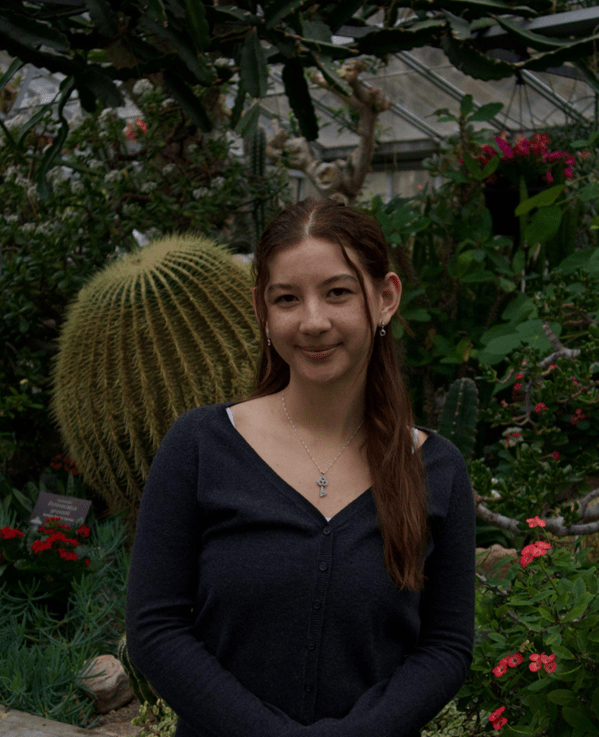
Celene Tate is an Honours BA graduate in Environmental and Urban Sustainability from Toronto Metropolitan University (TMU), with minors in Biology and Geography. She currently supports environmental data research and risk assessment services at ERIS (Environmental Risk Information Services). Celene’s technical background includes zooplankton, soil, water, and plant sampling across the GTA (Greater Toronto Area), acute and chronic ecotoxicology testing, and plant system research in hydroponics through her roles in TMU’s Urban Water Lab and Plant Biology Lab. She has also contributed to circular economy initiatives, community sustainability projects, and various GIS projects.
Celene is preparing to pursue a research-based master’s degree focused on restoration ecology, water systems, and environmental revitalization. Outside of work, she enjoys traveling, gardening, and caring for her cat, Goose!
 IWA YWP Canada