
Water is everywhere.
Born and raised in Sault Ste. Marie, Ontario, I grew up surrounded by the Great Lakes. My summers were spent collecting bugs and frogs and searching for cool rocks. I was seven or eight when I received my first microscope; a small, monocular discovery scope from a children’s science kit. That gift opened a new world for me, one where nothing was quite what it appeared to be. My interests quickly moved beyond the pre-made slides of sheep wool and onion cells, and suddenly a drop of pond water or the dead housefly on the windowsill became marvels of the natural world.
My fascination with the microscopic world intensified when I found a water bear under the microscope in my Grade 10 science class, returning the next day to find it desiccated after my slide dried up overnight. Maybe even then, something was foreshadowing my future in microbiology and water.
After high school, I attended Western University to pursue a degree in biology. I knew I loved science, but at 17, the professional horizon felt narrow. I didn’t grow up surrounded by scientists or people in graduate school, and coming from a small town, I had limited exposure to the range of careers available. I loved microscopy, but wasn’t sure where that could take me.
That changed when I took an introductory micro-immunology class in third year undergraduate. I found a genuine enthusiasm for bacteriology. In one lecture, a professor shared her story about switching disciplines several times before eventually finding her niche and completing her PhD in immunology. Her story stayed with me; graduate school was a path I could explore.
However, I knew little about applying to master’s programs, and when the COVID-19 pandemic hit later that year, the lack of in-person opportunities for me to learn microbiological lab skills worried me. Still, I applied to an MSc program and landed at the University of Waterloo. I was surrounded by incredible mentors who taught me everything I needed to know. My project focused on investigating water activity and microbial proliferation in a nuclear waste storage system. I didn’t know it then, but this was the beginning of understanding how microbes and water would shape my scientific career.
My master’s degree reinforced that water is not just a resource; it’s a vast, invisible infrastructure for life. The microbes I was studying in the lab had the power to influence environmental safety and public health. The impacts that water and microorganisms can have together became increasingly compelling to me.
After my MSc, I pivoted towards a stronger public health focus and found myself at Queen’s University, working within a multidisciplinary research team at the intersection of community health and the environment, all connected through water. Here, I began my current PhD project, monitoring antimicrobial resistance in wastewater.
Reflecting on my time in graduate school, bacteria and water have been central to my research regardless of the specific project or discipline. The more I develop in my career, the more I appreciate how interconnected these elements are, and how many directions these types of connections can take you.
I didn’t know that a microscope from a childhood science kit would set me on a path studying microbiology and water. I still don’t know exactly where this path leads next, but I know what I find meaningful, that I will always be learning, and that I am glad to be a part of the Young Water Professionals community along the way.
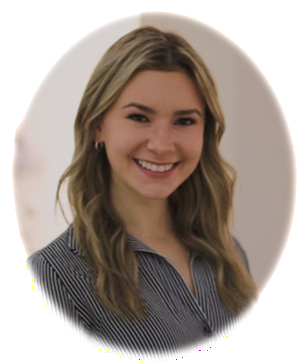
About Author:
Rhiannon Punch
Rhiannon is a PhD Candidate in the School of Environmental Studies at Queen’s University. Her research investigates wastewater surveillance of antimicrobial resistance (AMR) under a One Health lens. She holds a BSc in Biology from Western University and an MSc in Microbiology from the University of Waterloo. Rhiannon is passionate about the intersection of microbiology and water health. On the side, she enjoys participating in science outreach initiatives to get youth and the public engaged and excited about science.
 IWA YWP Canada