
My name is Abbas. I have always been driven by a deep curiosity and a desire to learn about the world around me. My older brother used to teach literature to high‑school students, and one of my favorite places in the house was his library, filled with novels, books, and poetry that felt like hidden worlds waiting to be explored. One day I grabbed a light book from the shelf and read the following poem: “Let’s not muddy the water. Imagine that close by, a dove is drinking from it, or in a distant grove, a finch is washing its wings in it, or in some village it fills a storage jar. Let’s not muddy the water.” This beautiful verse by the Persian poet Sohrab Sepehri (1967) [1] shaped my interest in water in a way that became part of my everyday thinking. It taught me that water quality is not only an environmental concern, but a shared responsibility. Since then, I have always tried to stay connected to that notion in both my studies and my work.
During my undergraduate degree in Plant Biology, I became interested in the ways plants can help reduce contamination through physical and chemical processes. What began as academic curiosity gradually grew into a stronger research direction, leading me to a master’s in Natural Resource Engineering at Shahid Beheshti University. In my thesis, supervised by Prof. Hossein Hashemi, I investigated the role of riparian buffer zones in reducing non-point source pollutants in surface runoff. This experience deepened my understanding of water quality as an interdisciplinary challenge connecting ecology, engineering, and environmental protection. Fieldworks, in particular, turned out to be far more demanding than I had expected: long days, unpredictable weather, and tight sampling schedules that tested my patience and resilience. But it also taught me hard lessons about the value of careful planning, detailed checklists, adaptability, and persistence, skills that later became essential for any field‑based study. After graduation, I joined BabEnviro Co., an environmental engineering consulting firm, where I worked directly with clients in water and wastewater treatment plants. One of the most beneficial aspects of this role was listening to their challenges and translating them into practical solutions. For instance, I realized that many industries were struggling to treat their oily wastewater before discharging it into rivers and lakes. This gap between technical capability and real‑world needs pushed me to deepen my expertise in water treatment technologies.
In 2018, I started an M.Eng. program in Civil Engineering at Memorial University of Newfoundland, where I focused on oil-water separation process, a main challenge in oil and gas, food, and pharmaceutical industries. Working with Professors Sohrab Zendehboudi, Xili Duan, and Nima Rezaei, I fabricated and characterized superhydrophobic and superoleophilic membranes at the laboratory scale and could remove > 97% oil from oil water mixtures. My dedication to high-quality research brought our team the prestigious Terra Nova Young Innovator Award in 2019. MY review paper has been published in Materials & Design (Elsevier) [2] and has received over 450 citations since June 2021. In addition, our research paper was selected as the featured article for the front cover of Chemical Engineering Science (Elsevier, vol. 235, 2021) [3]. I also received formal recognition from the Faculty of Engineering and Applied Science for excellence in teaching assistantship, acknowledging my contributions to graduate and undergraduate instruction. These practical backgrounds, awards, and accomplishments have made me confident in my ability to conduct the successful research, development, and other related duties I require to pursue a Ph.D. in the water quality area.
My motivation to do my research on microplastics was strongly influenced by the study of Cox et al. (2019), which revealed that humans may consume tens of thousands of microplastic particles annually through food, drinking water, and inhalation [4]. Realizing that microplastics are present not only in water but also in foods prepared and processed using water raised an important question in my mind: how can we effectively control and remove these contaminants before they reach humans? Motivated by this challenge, I began my PhD in Fall 2023 in the Department of Geography and Environmental Studies at Carleton University under the co-supervision of Prof. Onita Basu and Prof. Jesse Vermaire. My research focuses on understanding the occurrence, transport, and removal of microplastics in the Ottawa River and developing sustainable treatment strategies for capturing small-sized microplastics (<20 µm) in drinking water systems using eco-friendly functionalized adsorbents and machine learning approaches.
In addition to my academic research, I also gained Canadian professional experience that helped me connect scientific knowledge with practical water quality challenges. Through my experiences with the City of Ottawa Water Laboratory (2026) and Dillon Consulting Limited (2022), I gained firsthand insight into the importance of monitoring, data quality, and evidence-based decision-making in protecting public health and aquatic ecosystems.
Across different stages of my academic and professional life, one idea has remained constant: water connects ecosystems, communities, and future generations, and its protection cannot be the responsibility of a single discipline or sector. It requires collaboration, awareness, and sustained effort from scientists, engineers, policymakers, and the public alike. As I continue my work on emerging contaminants such as microplastics, I remain guided by this principle of shared responsibility, striving to contribute to solutions that ensure safe and sustainable water resources for the future.
References:
1. Sepehri, S. (1967). Water. Words Without Borders. https://wordswithoutborders.org/read/article/2007-07/water1/.
2. Rasouli, S., et al., Superhydrophobic and superoleophilic membranes for oil-water separation application: A comprehensive review. Materials & Design, 2021. 204: p. 109599.
3. Rasouli, S., et al., Design, fabrication, and characterization of a facile superhydrophobic and superoleophilic mesh-based membrane for selective oil-water separation. Chemical Engineering Science, 2021. 236: p. 116354.
4. Cox, K.D., et al., Human consumption of microplastics. Environmental science & technology, 2019. 53(12): p. 7068-7074.
Lead Editor: Elham soleimanian
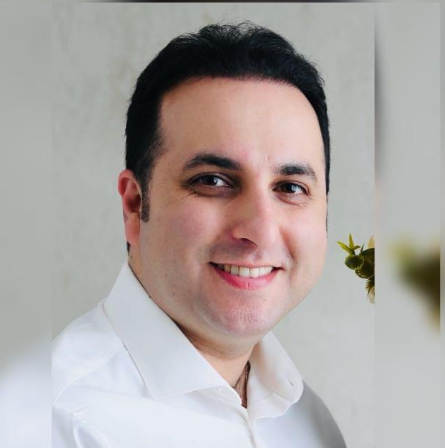
About Author:
Abbas Rasouli
Abbas is a Ph.D. candidate in the Department of Geography and Environmental Studies at Carleton University. His interdisciplinary research integrates science and engineering to track microplastics in Ottawa River and design novel functionalized filter media for removing emerging microplastics in water systems. He holds an M.Eng. in Civil Engineering from Memorial University of Newfoundland and an M.Sc. in Natural Resource Engineering from Shahid Beheshti University. Throughout his graduate studies, Abbas has published several peer-reviewed publications and received multiple awards. He is currently serving as a lab assistant with the City of Ottawa during the summer 2026, adding practical laboratory skills for analysing water and wastewater samples. Previously, his role as an environmental engineer at Dillon Consulting Limited brought him hands-on experience in contaminated site assessment, field sampling, and groundwater monitoring. Beyond research and professional practice, Abbas has contributed to the NSERC CREATE program focused on water and sanitation challenges in low-resource settings and has been active in community-oriented services, including volunteer coaching for newcomers through World Skills Ottawa. He is also a father of a three-year-old son, and his life outside of work reflects the same balance, curiosity, and commitment that define his professional journey.
 IWA YWP Canada